Detecting 5-hmCs
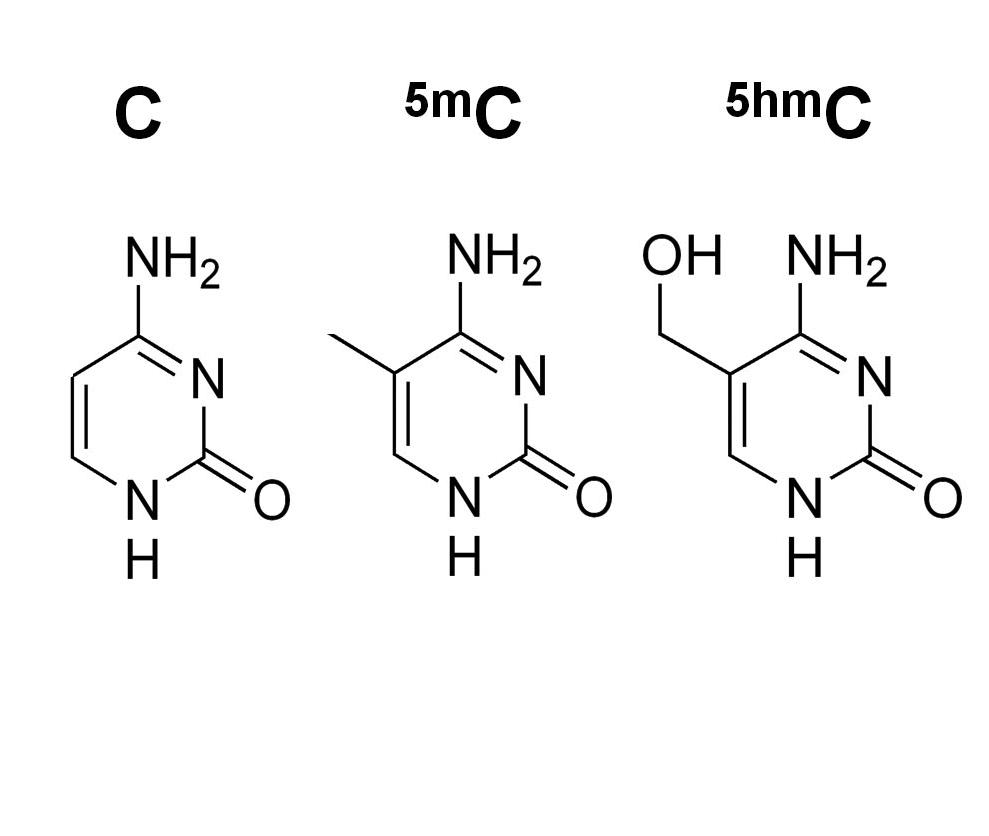
5-hydroxymethylcytosines (5-hmC) went undiscovered because they showed up like other 5-methoxycytosines through bisulfide sequencing. The neuroscientists behind a new study in Nature Neuroscience profiles 5-hmC across development using T4 bacteriophage B-glucosyltransferase to transfer an engineered glucose-azide moiety onto the the hydroxyl of 5-hmC. This moiety was then detected and used to map 5-hmCs across the genome of mouse cerebellar and hippocampal cells.
5-hmCs and the brain
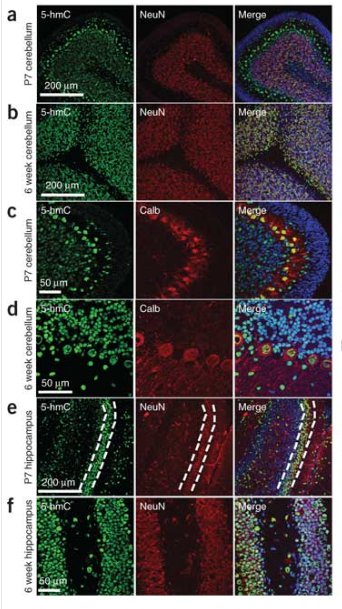
5-hmCs are found overall in the brain at approximately 10x the levels found in stem cells, though it is variable between cell type and varies by age. Interestingly, the 5-hmc seems to be depleted from the X-chromosome of both males and females. Also, 5-hmC was found at lower levels in immature neurons of young and old mice, suggesting it plays a role in neuronal development.
5-hmCs and MECP2
This new study also shows that the bases differ in function from 5-methylcytosines (5-mCs) in that they are not bound by methyl CpG binding protein 2 (MECP2). Since MECP2 is mutated in the Rett syndrome, a severe neurodevelopmental disorder that results in seizures, usually complete verbal impairment, and mental retardation, this indicates that the accumulation of 5-hmC could have significant effects on brain function. Conversely, the authors wanted to see what affect MECP2 has on 5-hmC levels. They found that MECP2 KOs showed a ~20% increase in 5-hmC and that MECP2-overexpressing animals showed a ~25% decrease in 5-hmC. They hypothesized that MECP2 binding to 5-mC may block the bases from being oxidized by TETs. They supported this hypothesis by adding the TET1 catalytic domain to 5-hmC DNA in vitro with or without the MECP2-methyl binding domain, and showed with a 1:1 ratio of Mecp2-MDB to 5-mC they could block 90% of the hydroxylation.
Future Directions
It is still unknown if proteins that specifically bind these epigenetic marks exist. Recently, polyclonal 5-hydroxymethylcytidine antibodies have been created , that can be used with DIPseq (DNA immunoperciptiation sequencing). I do not know if these enzymes can work with ChIP to isolate fragments enriched in 5-hmCs. I’m interested in the possibility of purifying proteins from ChIP and performing Mass-Spec on them to identify novel DNA-binding proteins. However, I’m not sure how hard it is to analyze mass-spec after the crosslinking and unlinking process.
I’d also be interested in generating TET-overexpressing mice to see if they could speed the process of 5-hydroxy-methylation in aging mice and see if there are behavioral or cellular phenotypes.
Finally it might be of interest to some scientists interested in studying 5-hmC modifications that there are restriction enzymes such as such as PVurts1I that cleave 5-hmC but not 5-mC DNA or unmethylated DNA, but I also have no personal experience with this enzyme.
—–
If you’re interested in the epigenetic effects on neurons and the brain, check out: We know a lot about drugs – new data shows long-term epigenetic changes
Filed under: Aging, Epigenetics, Genetics, Molecular, Mouse | Leave a Comment
Tags: 5-hmC, B-glucosyltransferase, DIPseq, MECP2, TET
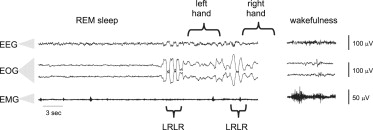
Scientists at the Max Planck institute in Munich, Germany recruited six lucid dreamers with years of experience for their study. Once in their dream, the subjects signaled researchers with left-right-left-right eye movements and then immediately started clenching their left hand ten times. Then they performed the eye movements again and made ten clenches with their right hand. The sideways eye movements were distinguishable from the spontaneous rapid eye movements on the EOG (motor eye component of an EEG) and gave a time point for researches to measure the dreamed fist clenches. Scientist found the clenche activated the expected areas in the contralateral sensorimotor cortex.
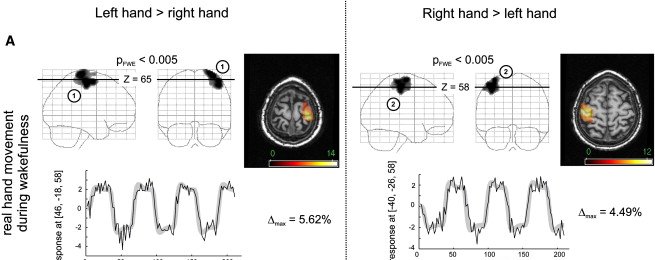
Previous brain lesion studies in cats and Rapid eye movement behavior disorder indicated that the brain might enact dream movements activity similar to when awake, but that the movements are prevented by active motor paralysis downstream of the signal. This study was the first to image the brain during specific dream content, and it showed that dreaming movements have similarity to actual and imagined fist clenches. If this finding also holds true for the sensory areas of the brain, it indicates that the visual decoding work of labs like Jack Gallant at the University of California, Berkeley could be used to record and visualize dreams–that is if you canstay still and manage to fall asleep through the loud clunkings of a claustrophobic fMRI machine.
The Gallant Lab reverse-engineers video from the brain activity from subjects watching it.
Interested in the neuroscience of sleep? Check out my post: Genetics of Sleep – How much do you need?
Filed under: Dreams, eeg, fMRI, Human, Motor, Sleep | 1 Comment
Tags: EEG, EOG, fMRI, imaging, Lucid dreams, sleep
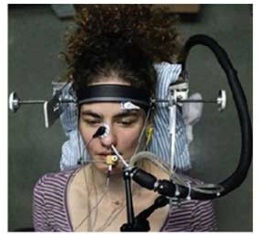
This brand new method developed by Hadas Lapid et al. sticks an electrode into the nose with an exposed tip that directly contacts the nasal olfactory epithelium. Subjects hold their breath as odorants are blown into the nose to avoid artifacts from breathing.
The study found that the epithelium seemed to be divided into patches that responded to pleasant odors and other patches that responded to unpleasant odors. As the authors write: “a location that responded maximally to a pleasant odorant was more likely to respond strongly to other pleasant odorants, and a location that responded maximally to an unpleasant odorant was more likely to respond strongly to other unpleasant odorants.”
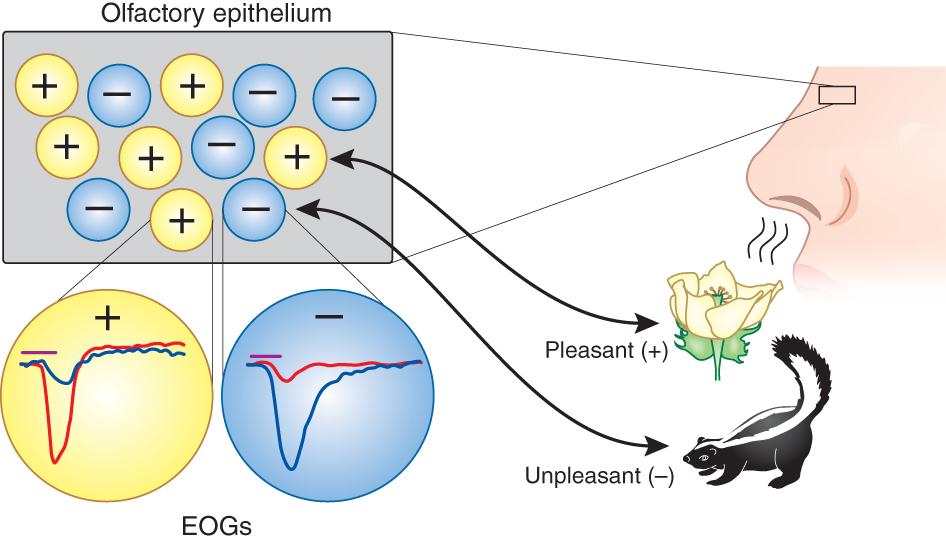
Understanding the olfactory system has proved more challenging than the visual and auditory systems where the stimuli space is more easily defined. Studying olfaction on human subjects who can be asked what they are smelling, while simultaneously recording quantitative measurements of their receptor responses will lead to an improved understanding of this sense. Understanding the olfactory epithelium will help define inputs to the olfactory cortex.
Some think the primary olfactory cortex can be used as a model for the association corticies necessary for higher thoughts, because the olfactory cortex can pair novel receptor activation patterns and bind them together as a new distinct odor.
Filed under: Human, Olfaction, Psychophysics, Sensory | 1 Comment
Tags: electro-oflactogram, EOG, odors, Olfaction, pleasentness
Details of the weight loss
A new study published in the NEJM enrolled 50 overweight or obese patients (BMIs between 27 and 40) in a 10-week 500 calorie diet of Optifast VLCD and low starch vegetables. As might be expected with such a rigorous diet 16 dropped out or did not lose the expected weight (indicating they might not have been abiding by the diet) and were excluded. The successful dieters dropped an average of 29 pounds from their original average weight of 209 pounds.

After the 10 week diets, subjects were given dietary advice to maintain their weight loss, followed up on in person every 2 months, and given phone calls in between with dietary counseling. Despite this, participants on average gained back 12.1 pounds they lost.
Hormones and Hunger
What makes this study cool is that they looked at hormone implicated in appetites before, immediately afterwards, and a year after the diet, and analyzed them beside the patients’ subjective desires to eat. Continue reading ‘Weight Loss Can Affect Hormones Increasing Appetite for Over a Year’
Filed under: Behavior, Hormones, Hypothalamus, Molecular, Obesity, Peptides | 2 Comments
Tags: diet, ghrelin, hormones, leptin, long-term, maintenance, NEJM study, obesity

There is a belief in the drug community that the war on drugs prevents good research from being done on drug use. While I agree there is a scarcity of research on the potential uses of many abused drugs or how they alter states of consciousness we really do know an amazing amount about what drugs do to our brain. In the early 2000s my worry was always about whether or not marijuana killed brain cells, unfortunately the picture is now more complex with drugs changing the biochemistry inside cells—making long-term epigenetic changes.
Alfred Robinson and Eric Nestler released a new review of long-term transcriptional and epigenetic mechanisms of addiction. The genetic contribution to addiction risk is ~50%, but few specific genes have been implicated. Drug use significantly changes the expression of hundreds of genes, differently for first use, after repeated use, and after repeated use following withdrawal.
The following data is from animals exposed to cocaine:

Continue reading ‘We know a lot about drugs – new data shows long-term epigenetic changes’
Filed under: Addiction, Behavior, Development, Drugs, Epigenetics, Genetics, Molecular, Review | Leave a Comment
Tags: Addiction, Drugs, Epigenetics, Nestler, Review, Transcription
Viberg of the Eriksson lab in Sweden shows in a new paper in Toxicology (full text) that a single exposure to BPA on postnatal day 10 has dose-dependent effects. (Mice sexually mature around p45.)

The paper is still in press, so details are sparse, but authors saw changes in spontaneous behavior when exposed to a new environment, minor changes in cholenergic-system mediated behavior (responses to nicotine), but no changes in the spatial memory (Morris Water maze) or anxiety (elevated plus maze).
Here is a further article from science direct that includes quotes from the authors.
BPA was previously known to increase the risk of trisomies which cause disorders such as Down Syndrome–Full Text. It is extremely important to consider the risks since elevated levels are found in many environmental sources from receipts, plastic water bottles, canned foods, and even dentistry. BPA accumulates in the body over time, so it is important to be careful, especially if you are a woman planning on having children.
It is also important to note that hyperactivity in mice refers to increased activity and locomotion, which could result from many things and may have little or no relationship to the type of hyperactivity observed in children with ADHD.
—–
If you are interested in the effects of hormones on the brain, check out my post: MPA, the Hormone used in the Depo Provera birth control shot, causes memory problems in rats
Filed under: Behavior, Development, Mouse | Leave a Comment
Tags: BPA, Brain Development, Environmental Toxin, Mouse Behavior
 Paul Garrity, PhD |
Just saw Paul Garrity present an interesting story on the function and evolution of TRPA1–a chemical and temperature sensitive cation channel of the transient receptor potential family. He initially discovered TRPA1’s role in thermosensation using an RNAi screening of drosophila larvae on a thermal gradient. |
As small ectotherms (a term which essentially means cold-blooded), drosophila must behaviorally regulate their temperature. If you put larvae on an uncomfortably hot part of a thermal gradient they will wander towards a cooler area. However with translation of TRPA1 is disrupted with RNA interference, larvae travel in all directions without regard to the heat.
They found TRPA1 was expressed in the front of the brain and probiscus, and using explants from the brain showed that the cells were directly responsive to temperature (and cells from TRPA1 KOs were not).
The group then compared their previous work on Drosophila melanogaster’s TRPA1, to that of a desert species–Drosophila mojavensis. They found that mojavensis’s TRPA1 channel had an elevated threshold for activation, and that larvae behavior preferred correspondingly higher temperatures on a heat plate. (Garrity is also interested in using TRPA1 as a transgene to activate certain groups of neurons. He calls this “thermogenetics” and says it could be used complementarily to optognetics. While there are still kinks to work out before it can be used in mammals, in Drosophila to channels have 1,000x higher conductance that optogenetic proteins.)

Drosophila Mojavensis
Continue reading ‘TRPA1 – Thermosensory and Chemosensory properties and Evolution’
Filed under: Drosophila, Genetics, Molecular, Uncategorized | Leave a Comment
Tags: Drosophila, Genetics, Molecular, Receptors, Transient Receptor Potential, TRPA1
Today was a two-lecture day at MIT. I’ll just post about the first for now.
 Bertil Hille, PhD |
Bertil Hille, PhD, from the University of Washington, lectured on G-protein signal transduction, specifically slow effects due to PIP2 (Phosphatidylinositol 4,5-bisphosphate) depletion–which was first shown in his lab by Byung-Chang Suh in 2001. |
|
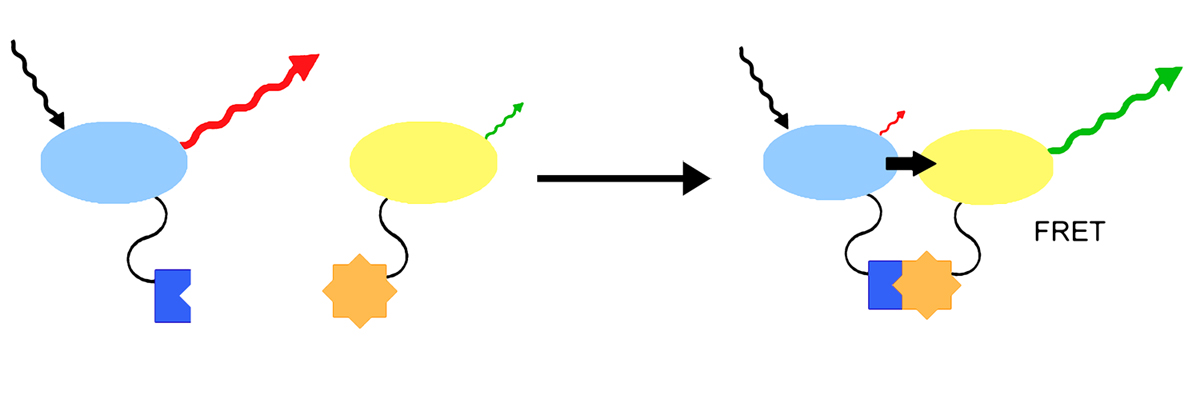
Psychiatrists, in addition to biophysicists and neuroscientists, may find his work interesting because lithium acts on the PIP2 pathway, so it may have implications for bipolar disorder or other psychiatric illnesses. Much of the research used the FRET (Fluorescence Resonance Energy Transfer) as a technique to measure protein-protein interactions. The Hille Lab also used FRET to measure PIP2 itself, by expressing two transgenes–phosphinositol-binding PH domains conjugated to CFP or YFP–and measuring the energy transfer between them. |
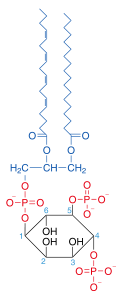 PIP2 |
Byung-Chang Suh showed that the complete shut down of KCNQ that occurs 5-10 seconds after Gq-coupled GPCRs does not depend on downstream effects of the canonical DAG or IP3 pathways, but rather on the depletion of PIP2.
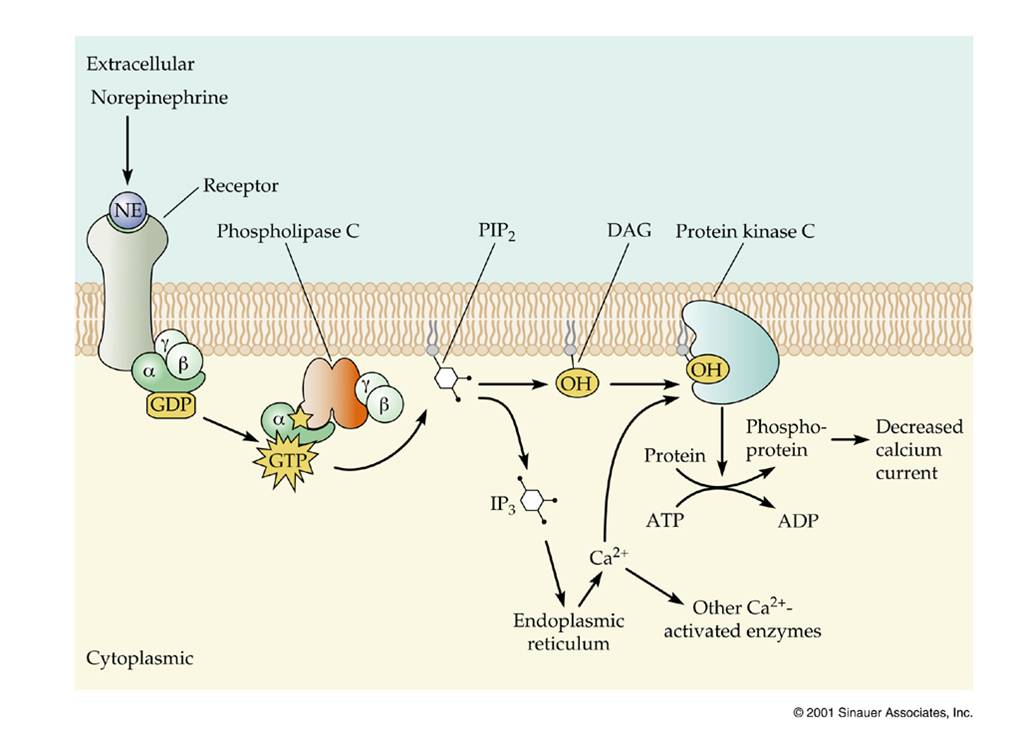
Hille also mentioned the genomics work of a Japanese scientist (whose name I missed and haven’t been able to find online), who wrote an algorithm to identify voltage-sensing channels in tunicates and as a biproduct discovered a membrane-bound voltage-sensing phsophatase that acts on PIP2 when a cell is depolarized.
Another interesting concept Hille included in his lecture was the possibility of phosphoinositol lipids acting as a “zip code” for the membrane.
Continue reading ‘G-protein Coupled Receptors Rule the Mind through Phosphoinositide Signals’
Filed under: Uncategorized | Leave a Comment
Tags: G-Proteins, MIT Lectures, PIP2, Signal Transduction
Sleep and appetite may seem unrelated at first, but they have more in common than you might think. I know the last few times I was up late working, I was snacking on something. (Though, this example is complicated by the fact that stress can lead to hunger too.)
The protein leptin is associated with hunger and metabolism. When you eat, leptin is produced by fat cells. Scientists have created genetically obese animals, by removing both copies of the leptin production genes or leptin receptors. Its important to note that most obesity in humans is rarely due to this disorder (because it is a rare mutation and recessive). the discovery of leptin showed how physiological the compulsion to eat can be especially after years of bad eating habits.
During digestion, elevated levels of leptin travel up through the blood to the hypothalamus. The hypothalamus is your brain’s connection between to the endocrine (hormone) system. It plays an important role in maintaining homeostasis, circadian cycles, and controlling motivated behaviors like hunger and thirst.
When leptin levels rise they act on your hypothalamus to release neuropeptides (αMSH and CART) into the arcuate nucleus. These peptides make you feel more full and increase your metabolism. When leptin levels fall the peptides NPY, AgRP, and MCH are produced, and they act on your arcuate nucleus and lateral hypothalamic area to make you hungry and decrease your metabolism.
The hormone Ghrelin also stimulates appetite directly by acting on neurons that release NPY and AgRP.
What does this all have to do with sleep you might ask? Here it can get a little complicated, especially since Ghrelin was only discovered in 2005. Research has shown that the amount of ghrelin increases and amount of leptin decreases with a lack of sleep. Other studies (while not directly indicating ghrelin or leptin) have shown that children with even just an hour less of sleep were more likely to develop obesity.
The cause for the changes in ghrelin and leptin levels are unknown, but it could be from their involvement in maintaining circadian rhythms. Also, anatomically its makes sense that sleep and appetite are intertwined as they’re controlled in nearby areas of the brain.

Filed under: Hormones, Hypothalamus, Peptides | 1 Comment
The New York Times mentioned the mammalian diving reflex in an article about David Blain last Tuesday. In humans, it allows you to hold your breath longer when under water, by slowing the heart and lowering blood flow to your extremities. Aquatic mammals have a more intense version of this reflex, and when diving deep into the ocean, they reflexively pass blood through their chest cavity to stop their organs from being crushed by the pressure.
In humans, this reflex is started when water sensitive receptors in the face activate cranial nerve V (trigemenal). The trigeminal signals the brain and then cranial nerve X (vagus).
Cranial nerves are nerves directly connected to your brain: olfactory, optic, oculomotor, trochlear, trigeminal, abducens, facial, audito-vestibular, glossopharyngeal, vagus, spinal accessory, and hypoglossol. (Additionally there is a controversial cranial nerve 0 which recent studies suggest may be associated with pheromones.)
My neuropsych textbook included the mnemonic “On Old Olympia’s Tottering Top A French And German Viewed Some Hops.”
Wikipedia also includes the more lude (and therefore maybe easier to memorize): Oh, Ohh, Oh, To Touch And Feel Virgin Girls’ Vaginas And Hymens. Note with this second mnemonic it calls the eleventh nerve just the accessory nerve instead of the spinal accessory nerve.
Another immature mnemonic is listed to help memorize the types of information they carry (where s is for sensory, m is for motor, and b is for both): Some Say Money Matters, But My Brother Says Big Boobs Matter More. Both the nerves discussed earlier in this post (V the Trigeminal and X the Vagus) carry both sensory and motor information.
Wikipedia’s full list contains many mnemonic gems like: OLd OPie OCcasionally TRies TRIGonometry And Feels VEry GLOomy, VAGUe, And HYPOactive.
Only On Occasion, Touching The Amorous Female Virgin Goat Vacillates A Hand
You have 1 nose, 2 eyes, and 3,4,6 make your eyes do tricks!
Only April 30th, David Blain will go on Oprah and attempt to break the world record for holding one’s breath after breathing pure oxygen of 16 minutes and 14 seconds. A feat impossible without the mammillian diving reflex.
Filed under: Cranial Nerves, Reflexes | 2 Comments
 Ben Kuebrich


